


Towniz World: Avatar Life
4.489.00 Reviews
App Specs
- Version
- 1.17.25
- Updated On
- License
- Free
- Downloads
- 1,000,000+
- Developer
- My Town Games Ltd
- Categories
- Role Playing
- Platform
- Android
Screenshots
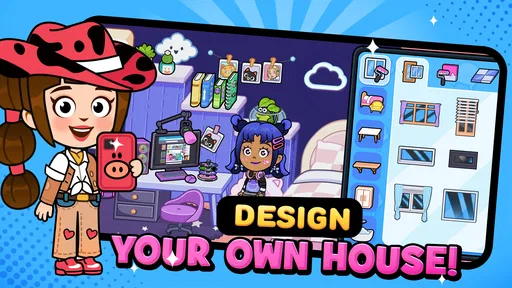
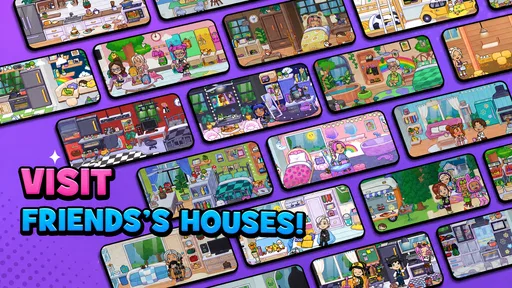
 Analysis by AppCompare
When I first opened Towniz World: Avatar Life, I understood its appeal quickly: this is a role-playing game built around creating and acting out everyday stories rather than chasing a fixed mission. The setting invites me to explore, arrange scenes, move characters around, and decide what kind of small world I want to build. That makes it feel closer to a digital dollhouse with role-playing freedom than to a traditional adventure game with a strict campaign.
That difference matters. If you want constant combat, character statistics, or a clear sequence of objectives, this will probably feel too open-ended. If you enjoy inventing situations, changing the mood of a room, and returning to the same world with a new idea, the design is much more welcoming. I found the best way to judge it was not by asking whether it gives me enough missions, but whether it gives me enough room to make my own reasons to play.
Developed by My Town Games Ltd, the game is free to start and is rated for Everyone. It has attracted more than a million installs and holds a 4.4 average from roughly five thousand ratings, which fits the broad, family-friendly audience it is aiming for. It was released on December 11, 2025, and version 1.17.25 requires Android 8.1 or later. Optional purchases range from $0.99 to $6.99 per item, so the important question is not simply whether it costs nothing to download, but how comfortably you can enjoy the available world without buying extras.
How much freedom actually changes the way you play
I find that the freedom here changes the kind of attention I bring to a session: instead of asking what objective comes next, I look for one choice that could make a scene feel different. Trying a small variation—such as changing who arrives first—can give a familiar setup a new direction without making play feel complicated. That hands-on approach also makes it easier to judge whether this open-ended style is a good fit before deciding what to explore next.
Choosing a story instead of following one
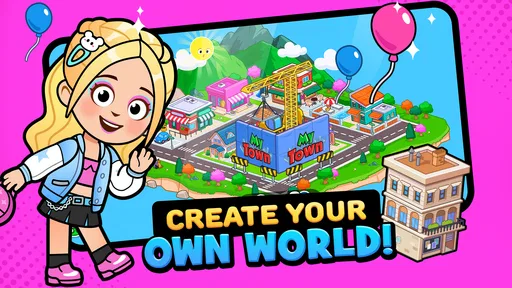
The central decision in Towniz World is what to do with the space and characters in front of me. I can approach a location as a place to explore, a stage for a short story, or a backdrop for arranging a scene. There is no single “correct” way to spend a session. One day I might focus on moving through the environment and looking for details; another day I might treat the same area as a setting for a family routine, a school-style scenario, or a completely improvised event.
This open structure creates a useful kind of control. I am not waiting for the game to tell me when a story has started. I decide who is involved, what the situation is, and when it is finished. That makes the game particularly suitable for younger players who like imaginative play, as well as for adults looking for something calm and creative rather than demanding.
The trade-off is that freedom can feel like a lack of direction. Players who normally rely on quests, unlock paths, or reward screens may open the game and wonder what they are supposed to accomplish. My advice is to begin with a simple scenario instead of trying to understand the entire world at once. For example, choose a location, assign a purpose to each character, and create one small change in the situation. That gives the session a beginning and an ending without forcing the game into a structure it was not designed to provide.
Worth Reading Before You Choose

EA SPORTS FC Mobile 26 Is a Bigger Football Game, but It Takes Time

Flipboard Shows What News Apps Must Do Beyond the Feed

Switching to Android Auto Means Rethinking Your Driving Routine

Google Calendar Makes a Crowded Week Easier to Manage

Ludo King Makes the Most of the Minutes Between Plans

Baby Panda World Brings Quick Play to Modern Phones, but Its Game Library Feels Busy
Planning scenes makes the open world more enjoyable
I got more out of the game when I planned ahead by a few minutes. Before moving characters around, I decided what the scene was meant to show: a busy morning, a surprise visit, a disagreement, or a quiet evening. This sounds simple, but it changes the experience from random tapping into deliberate play. Once I had a basic idea, I could use the environment more thoughtfully and avoid repeatedly moving characters without a purpose.
A useful technique is to give every character a role that can change. One character can begin as the person in charge, become the one who needs help, and then take part in the resolution. This creates a sense of progression even when the game is not presenting a conventional quest. It also makes revisiting a location worthwhile, because the same setting can support a different relationship or event.
The strongest feature here is not a single activity; it is the ability to turn ordinary spaces into reusable story tools. That is a deeper strength than a short burst of novelty. It rewards players who enjoy planning and rearranging, while offering less to anyone who wants the game to generate all the excitement automatically.
Everyday use case: a short play session with a clear purpose
Imagine a child has twenty minutes before dinner and wants to play but does not have time for a long adventure. In Towniz World, that player can create a compact scenario: a character arrives somewhere, another character has to respond, and the scene ends when the problem is solved. The session can stay small and still feel complete. There is no need to remember a complicated storyline or reach a distant checkpoint.
I also see value for shared play between a parent and child. One person can suggest the situation while the other arranges the characters and environment. Then they can switch roles. This gives the game a conversational quality that many conventional role-playing games lack. It is less about proving who is better and more about agreeing on what happens next.
For solo players, the same approach works as a creative routine. I would recommend keeping a few different story ideas in mind rather than trying to use every available element in one sitting. A focused scene is usually more satisfying than a crowded one, especially when the goal is to make the characters feel like they are responding to one another.
Where the game differs from usual role-playing alternatives
Compared with a traditional role-playing game, this experience puts much less emphasis on combat, equipment, character growth, and numerical decisions. In a conventional title, I might choose a build, compare abilities, manage resources, and prepare for a difficult encounter. Here, the meaningful choices are more social and creative: where a character should be, what they are doing, and how the situation changes when another character enters.
It also differs from a linear children’s game. A linear game may be easier to understand immediately because it gives clear instructions and rewards. Towniz World asks the player to supply more of the structure. That can be a strength for imaginative children, but a weakness for players who need constant feedback. If your priority is a polished campaign with a definite ending, another role-playing option will likely serve you better.
Against a pure avatar-customization experience, the advantage here is the wider sense of a shared world. The avatar is not only something to look at; it becomes part of a scene involving places, routines, and other characters. The limitation is that the game may feel less personally expressive if you mainly want detailed appearance editing or a long-term identity system. Its creativity is strongest in the situations you stage, not necessarily in turning one avatar into a deeply developed individual.
Risk and reward without traditional combat
Towniz World has a different kind of risk-and-reward structure from most role-playing games. The risk is not losing a battle. It is spending time on a scene that does not come together, overloading a location with too many ideas, or expecting the game to provide a dramatic payoff that you need to create yourself. The reward is a successful little story that feels coherent because your choices shaped it.
I found that the most rewarding sessions came from limiting the number of decisions at the start. Choosing one location, a small group of characters, and one problem creates room for reactions. If I added too many elements immediately, the scene became harder to follow and the characters felt more like objects being moved than participants in a story.
This leads to a practical planning horizon. For a quick session, plan only the next few actions. For a longer session, decide on a beginning, a change, and an ending before adding decoration. The game supports both approaches, but the player has to choose the scale. That is an important distinction from games that automatically pace the experience through missions.
How to make experimentation feel worthwhile
One of my favorite ways to approach this kind of game is to replay the same setup with one decision changed. Keep the location and most characters in place, then alter who arrives first or who takes responsibility. This turns the world into a small experiment. I can compare how the story feels when a character acts early, waits, or becomes the person who solves the problem.
Another useful habit is to treat movement as storytelling rather than decoration. A character entering from one side, waiting in a separate area, or joining a group later can communicate a relationship without needing a long explanation. This is especially helpful when creating scenes for younger players, because the physical arrangement makes the story easy to understand at a glance.
The reward is therefore cumulative rather than immediate. A single interaction may look modest, but a sequence of intentional choices can create a scene with a clear rhythm. Players who enjoy that process will notice more possibilities over time. Players who want a constant stream of new rewards may instead feel that the game is asking them to do too much of the creative work.
Adapting when the first idea does not work
Open-ended games are rarely at their best on the first attempt. Sometimes a scene feels flat because the characters have no reason to interact. Sometimes the setting suggests a story that is too large for a short session. I learned to adapt by reducing the idea rather than abandoning it. A complicated event can become one conversation, one arrival, or one decision.
When a scene becomes confusing, I would reset the situation mentally and identify the one action that matters most. Who needs something? Who can provide it? What changes afterward? These questions help create direction without turning the game into a checklist. They also make the experience easier for younger players, who may enjoy the freedom but still benefit from a simple framework.
Adaptation is particularly important for shared play. A child may change the story halfway through, and that is not necessarily a problem. Instead of correcting the idea, I would treat the unexpected change as the new central event. The game works best when the player responds to imagination rather than trying to force a prepared script.
What the free entry means in practice
The free price makes it easy to test whether this style suits you before spending anything. That is valuable because the game’s appeal depends heavily on personal taste. Someone who enjoys arranging characters and inventing scenes may find the free starting point generous enough for regular casual play. Someone who wants a deep progression system may discover quickly that the basic structure is not aimed at them.
The optional purchases, priced from $0.99 to $6.99 per item, are worth considering before handing the game to a child. I would make the purchasing decision together with the player and set expectations early. The most sensible approach is to enjoy the available creative loop first, then decide whether additional content would genuinely expand the kinds of stories you want to tell. Buying simply because an item appears attractive can be less satisfying than identifying a specific gap in your play.
This is also where the game differs from a paid, self-contained role-playing title. A traditional purchase may provide a known amount of structured content at the beginning. Towniz World lowers the barrier to trying it, but the optional-item model means families should pay attention to how the experience fits their own boundaries. The free download is convenient, yet convenience does not remove the need for thoughtful purchasing habits.
Depth over time: why replay depends on the player
The depth here is not mainly about unlocking increasingly powerful abilities. It comes from learning how to use the world more intentionally. At first, I focused on discovering what could be moved or combined. Later, I paid more attention to pacing, character relationships, and the order in which events happened. That shift made the game feel richer without requiring a complicated rules system.
Players can create their own long-term structure by revisiting locations with different themes. One session can establish a routine, another can interrupt it, and a later session can show how the characters respond. This creates continuity through imagination. It is not the same as a formal campaign, but it can still give a regular player a reason to return.
A useful long-term method is to keep a small rotation of story types: a routine, a problem, a celebration, and a discovery. Switching between them prevents every session from becoming the same kind of pretend play. It also reveals which parts of the world you actually enjoy using. If you repeatedly return to social scenes and rarely explore, that tells you something about your preferred play style; if you enjoy rearranging locations more than acting out dialogue, the game can support that too.
Still, I would not call the game endlessly deep for every audience. Players who need increasingly difficult challenges, strategic combat, or measurable mastery may run out of reasons to continue. The replay value is strongest for imaginative users who are comfortable setting their own goals. That is not a flaw, but it should shape expectations before installation.
Practical fit for families and casual players
The Everyone age rating makes the game approachable for a broad audience, and the relaxed role-playing format is easier to share than a competitive game. A parent can join without needing to learn a complicated control system, while a child can lead the story and make the important decisions. I think the game is especially well suited to short, low-pressure sessions where creativity matters more than achievement.
For a child who becomes frustrated when there is no obvious objective, I would introduce a simple challenge: create a scene in which a character has to reach a place, meet someone, or change the situation. That adds direction without removing freedom. For a child who already enjoys pretend play, I would step back and let them decide the rules. The game becomes more enjoyable when the adult supports the story instead of taking control of it.
Older players should approach it with the right expectations. The appeal is not nostalgia for a classic role-playing campaign, nor is it a substitute for a strategy game. It is a flexible creative space. If that sounds relaxing, it may become a pleasant way to unwind. If you want a stronger challenge, you may prefer a game with quests, resource management, or tactical consequences.
Version, accessibility, and everyday expectations
The current version is 1.17.25, and Android users need at least version 8.1 of the operating system. That makes the technical entry point reasonably clear for anyone checking an older device before installing. I would still test the game on the device intended for regular play, especially if a child will be using it independently, because comfort with the screen and controls matters more here than raw performance.
The game’s simple premise is easy to explain: explore, arrange, and create your own situations. But the practical experience depends on patience. The first session may be more about learning how to think in scenes than about discovering a reward loop. I would give it a focused trial rather than judging it after a few random taps. Pick one setting, make one story, and see whether the act of shaping the situation feels enjoyable.
That test also answers an important question: does the player want a game or a creative toy? Towniz World sits between those descriptions. It has the identity of a role-playing game, but much of its satisfaction comes from using it as a toy box for stories. Knowing that beforehand prevents disappointment and helps the right audience appreciate what it is offering.
My strategy verdict
I recommend Towniz World to players who like open-ended role-playing, family-friendly imaginative scenes, and the freedom to decide what counts as progress. My strongest advice is to play with a small plan: choose a setting, define one change, and let the characters respond. That approach reveals more of the game’s value than waiting for a traditional mission to appear.
I would be more cautious about recommending it to someone seeking combat, deep character builds, competitive pressure, or a tightly written campaign. Those players may find the lack of conventional objectives limiting, and optional purchases should be considered carefully by families before they become part of the routine.
For me, the game succeeds because it turns ordinary play into a sequence of decisions about space, timing, and relationships. Its rewards are creative rather than numerical, and its depth grows when I revisit an idea and change one part of it. Towniz World is at its best when I stop waiting for the game to tell me what to do and start treating the world as a stage I can direct. That makes it a worthwhile free download for the right player, provided that player wants to create the adventure instead of simply receiving one.
Pros
- Creative avatar and character customization options
- Open-ended activities encourage imaginative roleplay
- Colorful world is appealing to younger players
- Simple controls are easy for children to understand
- Frequent locations provide variety during exploration
Cons
- Some items and features may require in-app purchases
- Gameplay can feel repetitive after extended sessions
- Limited challenge for players seeking deeper mechanics
- Requires a compatible device with enough storage space
- Online features may need parental supervision
FAQs for Towniz World: Avatar Life
What is Towniz World: Avatar Life?
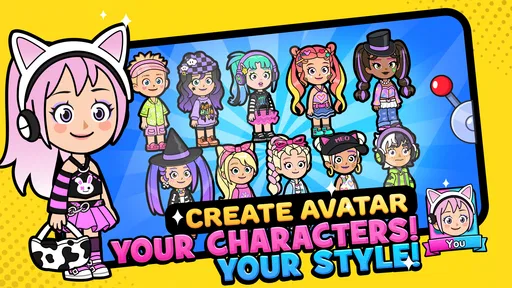
Towniz World: Avatar Life is a casual life-simulation game where you create customizable avatars, explore colorful locations, decorate spaces, and act out everyday stories. Its open-ended design lets players decide what to do rather than follow one fixed objective, making it suitable for imaginative play, character creation, and relaxed exploration. The exact content available may vary by device version and updates.
Is Towniz World: Avatar Life free to download and play?
The game can generally be downloaded without an upfront purchase, but some features, items, locations, or customization options may be offered through in-app purchases. Before downloading, check the store listing for the current pricing model and review any available parental controls. If children will use the app, it is a good idea to protect purchases with device-level authentication.
Can children play Towniz World: Avatar Life safely?
Towniz World: Avatar Life is designed around creative role-play and avatar customization, which can make it appealing to younger players. However, parents should still review the game’s age rating, advertising, online features, and purchase settings before allowing independent play. Store policies and content can change, so supervision and restricted purchases are recommended, especially on shared family devices.
Does Towniz World: Avatar Life require an internet connection?
Some parts of Towniz World: Avatar Life may work offline after the necessary game files have been installed, but an internet connection can be required for downloading updates, loading advertisements, restoring purchases, or accessing particular content. Offline availability may also differ between Android and iOS versions. For the most reliable information, check the official store description and test the game with connectivity disabled.
What devices are compatible with Towniz World: Avatar Life?
Compatibility depends on the operating system, device model, available storage, and the minimum software version specified by the developer. Before installing, open the official Google Play or App Store listing and confirm that your phone or tablet meets the requirements. Keeping the operating system updated and having sufficient free space can help prevent crashes, slow loading, or installation problems.


